9+ curated guides • Updated November 2025
Before Coco Chanel, fine jewelry was a public ledger of a husband's wealth. Her radical decision to champion bold, beautiful 'fakes' wasn't just about aesthetics; it was a calculated revolt. This is the story of how costume jewelry became the great equalizer, dismantling old-world notions of value one glass pearl at a time. It was a masterstroke of cultural subversion, turning adornment from a passive display of inherited status into an active declaration of personal style and independence. Chanel didn't just sell jewelry; she sold a new kind of freedom.
While Western fashion often screams for attention with bold, statement jewelry, Korean style has perfected the art of the whisper. It’s a philosophy hidden in plain sight: the power isn't in one loud piece, but in the deliberate 'punctuation' of an outfit with tiny, strategic accessories. Forget everything you think you know about making an impact; we're about to decode the subtle language that makes K-fashion so effortlessly chic. This isn't just about 'less is more'; it's about making 'less' do more work. It’s a conscious choice to guide the eye, to add a final, perfect note to a composition, and to tell a story of restraint and confidence. As a stylist working in the heart of Seoul, I see this every day—the quiet power of a single, perfectly placed earring or a thin chain against a collarbone. It’s time to learn the grammar.
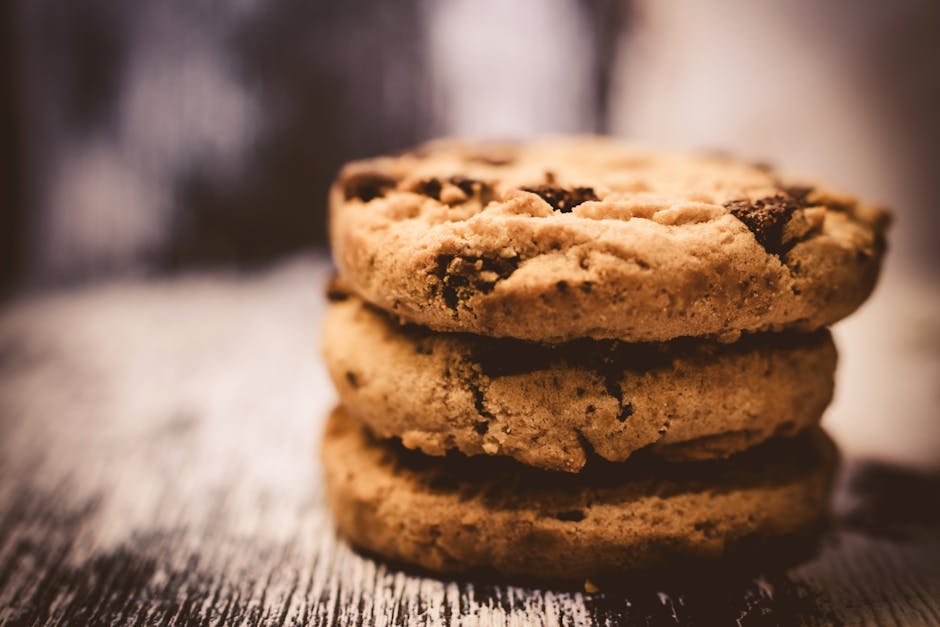
Forget the endless search for the one 'perfect' chocolate chip cookie recipe—it doesn't exist. Instead, what if you could engineer your ideal cookie based on hard data? We've turned the kitchen into a lab to deconstruct this classic treat, giving you the blueprint to control everything from chewiness to crispiness. This is not another recipe; this is a system. By isolating and manipulating the core variables—fat, sugar, flour, and temperature—we can map the entire spectrum of possible cookie outcomes. We call it The Cookie Matrix. Prepare to move beyond simply following instructions and start making informed, data-backed decisions to build your signature chocolate chip cookie from the ground up.
Scroll through any red carpet gallery, and you'll notice something strange. Beyond the designer gowns and flawless makeup, a curious uniformity has taken hold: the smile. This isn't just about straight, white teeth anymore; it's about an identical, hyper-perfect 'veneer face' that has quietly become the Hollywood standard, pushing us into a bizarre dental uncanny valley where perfection starts to feel profoundly unnatural. This aesthetic shift signals a deeper cultural move away from enhancing natural features and towards replacing them with a standardized, digitally-optimized ideal. We're no longer celebrating unique beauty; we're manufacturing a uniform version of it, and the results are becoming subtly unsettling.
In an age of 24/7 social media updates and constant self-promotion, visibility is seen as the currency of fame. Yet, some of the world's most popular figures defy this rule by doing the exact opposite: they disappear. This investigation pulls back the curtain on the 'anti-fame' playbook and reveals why intentional scarcity is the ultimate power move in modern celebrity. This strategy transforms a public figure from a mere commodity into a cultural event, proving that in the economy of attention, a controlled absence is worth more than a constant presence. We will dissect how this calculated mystique is constructed and why it creates a level of devotion that endless accessibility never can.
You've been told a GIA certificate is your diamond's ironclad guarantee, the ultimate seal of approval. But what if the most expensive mistakes aren't in what the report says, but in what it doesn't scream from the page? We're pulling back the curtain on the subtle codes and 'in-between' grades that can make or break your diamond's true value and beauty. As a GIA-trained professional who has seen it all, I'm here to translate the fine print that separates a good diamond from a great one—and a fair deal from a costly error. We'll move beyond the 4Cs and into the territory of the true connoisseur, ensuring the diamond you bring home is every bit as brilliant as its paperwork suggests.
Ever wonder why one batch of peanut butter cookies is perfectly chewy while the next is a crumbly disaster, even when you followed the recipe? The secret isn't in the brand of peanut butter; it's in the chemistry. We're breaking down the science behind the bake, transforming you from a recipe-follower into a cookie architect. This isn't just another list of ingredients. This is the Baker's Equation, a molecular blueprint that puts you in complete control. By understanding the function of each variable—fat, sugar, flour, and leavening—you'll learn to diagnose problems before they happen and tweak any recipe to produce your ideal cookie, every single time.
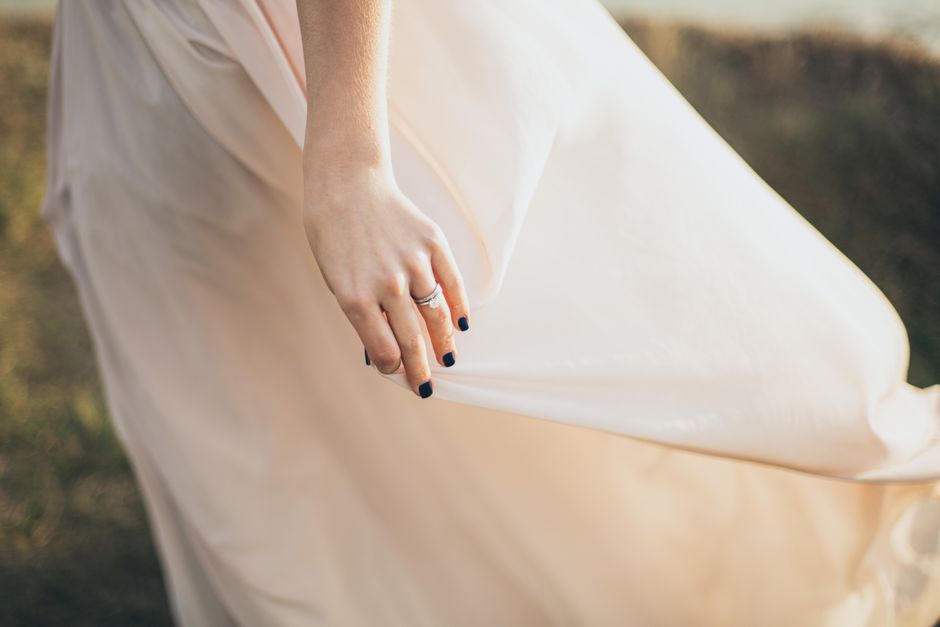
You know the tradition: fourth finger, left hand, a direct line to the heart. But look around. Notice the surgeon who wears their ring on a necklace, the widow who has moved it to her right hand, or the creative who stacks it on their index finger. A wedding ring's placement is more than just a custom; it's a dynamic, personal story told without a single word. This simple metal band has evolved from a static symbol of ownership into a fluid, expressive piece of our personal grammar. As a cultural anthropologist, I've observed that we are in the midst of a fascinating ritualistic shift. We are no longer just wearing rings; we are using them to broadcast nuanced messages about our identity, our professions, and the very nature of our partnerships. This article is your guide to reading this silent language.
You've seen its iridescent shimmer on antique jewelry and the fretboard of a guitar. But the true power of mother of pearl isn't its beauty—it's its nearly indestructible microscopic design. Scientists are now looking past the glow and into this ancient biological blueprint to engineer the toughest, lightest materials humanity has ever seen. Also known as nacre, this material is the inner lining of mollusk shells, nature's own composite armor. It's 95% brittle chalk (aragonite) and 5% soft organic polymer, a combination that by all rights should be fragile. Yet, nacre is thousands of times tougher than its constituent parts. The secret isn't what it's made of, but how it's assembled. This article deconstructs that architectural genius and explores how labs across the globe are racing to mimic it, unlocking a future of materials that can bend without breaking and stop projectiles in their tracks.